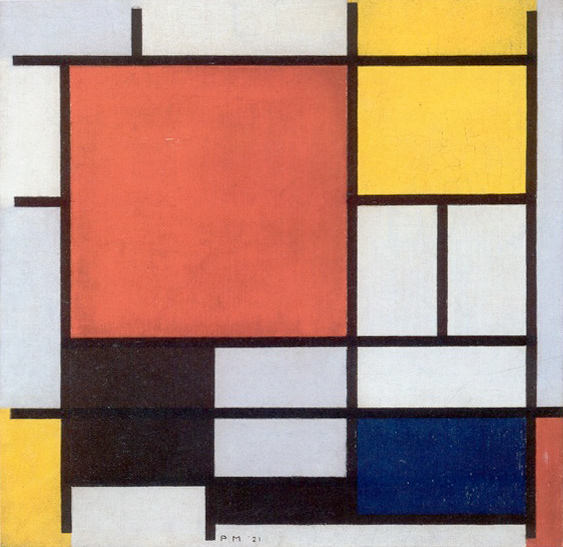
This motion piece is my interpretation of Piet Mondrian’s visual language, translated into movement. Instead of copying one of his paintings directly, I focused on how his use of color, line, and balance could come alive through timing and animation. I started with quick studies in Procreate, moved into Maya to build the geometric forms, and then refined the pacing and camera motion to create a simple but intentional sequence.
TOOLS USED
Procreate
Autodesk Maya
Arnold Renderer
PROJECT GOAL
The goal was to take Mondrian’s structured, grid-driven world and explore what happens when those shapes start to shift, overlap, and move. I wanted the motion to feel clean and purposeful, the same way his paintings feel deliberate and controlled. This meant paying attention to timing, spacing, and the way each shape entered or left the frame.
Concept Development
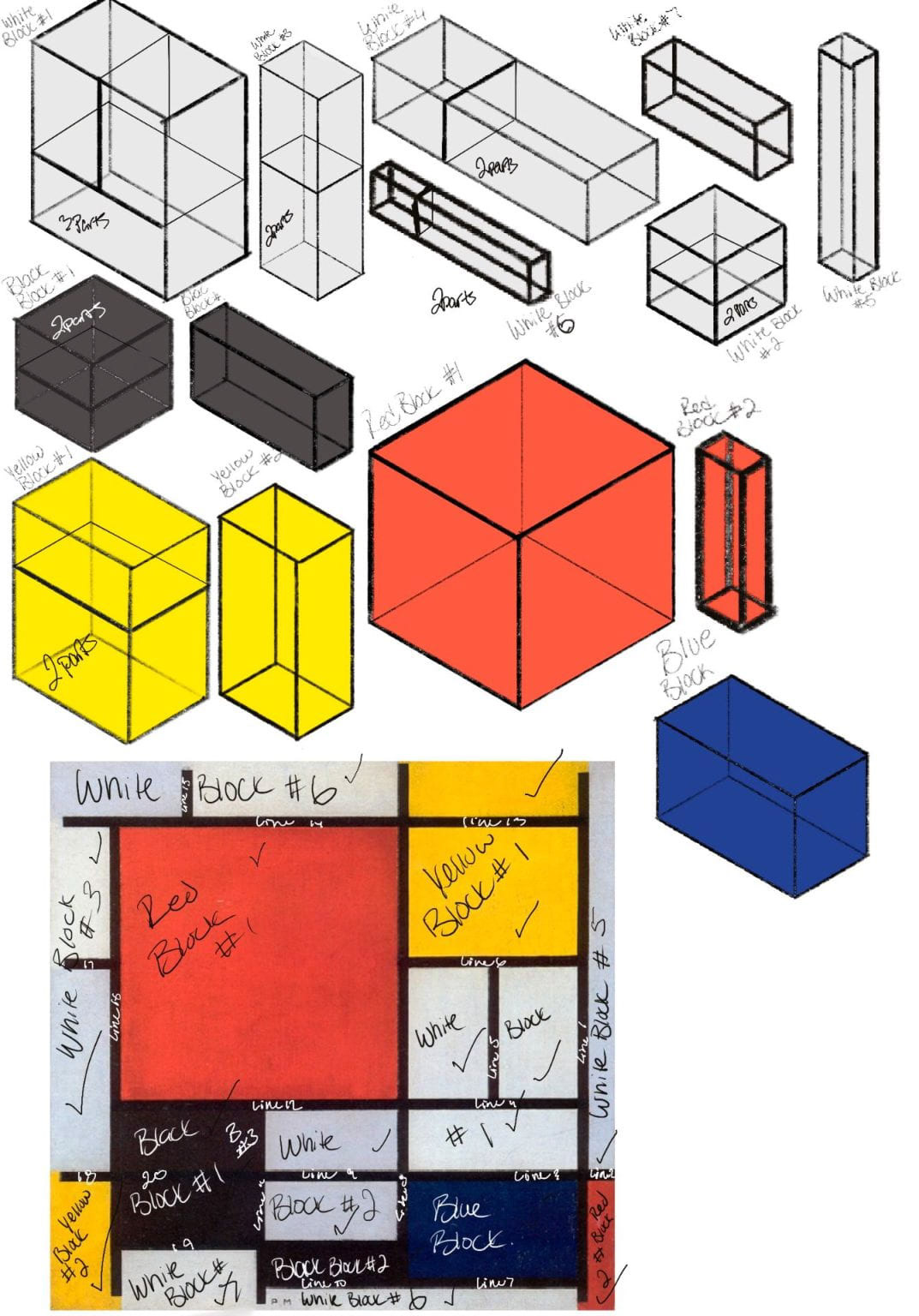
I began by sketching an isometric grid in Procreate and experimenting with block arrangements, color proportions, and line weight. Once I landed on a layout that felt balanced, I rebuilt it in Maya using cubes and planes. I sampled the color palette directly from a reference image to keep the tones accurate. After that, I experimented with camera angles to find a path that felt smooth and rhythmic without overcomplicating the motion.
PROCESS BREAKDOWN
1. Initial Sketching
I sketched the composition to understand spacing and color distribution before moving into 3D.
I sketched the composition to understand spacing and color distribution before moving into 3D.
2. Blocking in Maya
I positioned simple cubes and planes to recreate my sketch in 3D space.
I positioned simple cubes and planes to recreate my sketch in 3D space.
3. Camera + Timing Tests
I played with camera paths and keyframe timing to get the pacing right—slow, steady, and minimal.
I played with camera paths and keyframe timing to get the pacing right—slow, steady, and minimal.
4. Shaders + Lighting
I manually color-sampled from Mondrian’s palette and set up simple Arnold lighting to keep the scene bright and flat.
I manually color-sampled from Mondrian’s palette and set up simple Arnold lighting to keep the scene bright and flat.
5. Final Render + Clean-Up
After smoothing out the easing and transitions, I rendered the final sequence and made small adjustments to keep the motion feeling calm and intentional.
After smoothing out the easing and transitions, I rendered the final sequence and made small adjustments to keep the motion feeling calm and intentional.
A short animation study inspired by Mondrian’s use of color, line, and geometric rhythm, re-imagined as a slow, structured motion sequence.
Reflection
Working on this piece helped me think more intentionally about timing and restraint. Mondrian’s visual style is so controlled that I had to be really careful about how much movement I allowed and how it affected the overall balance. It taught me that even minimal motion can feel expressive when every shift is purposeful.