This project explores how narrative can emerge from space, light, and perspective. Inspired by the idea of looking through a threshold into another world, I built a conceptual Maya environment that treats the viewport itself as part of the story. Using lighting, camera placement, and simplified forms, I aimed to evoke a sense of surreal transition between familiar and unfamiliar space.
Tools Used
Autodesk Maya
Arnold Renderer
Physical Sky Lighting
Camera Tools
Basic Shader Nodes
Arnold Renderer
Physical Sky Lighting
Camera Tools
Basic Shader Nodes
Project Goal
The goal of this project was to design an environment built around the concept of “the looking glass” and how digital spaces can challenge our expectations of reality. The assignment encouraged experimentation with perspective, depth, and spatial relationships, asking how a scene can visually suggest narrative without characters or text.
Concept Development
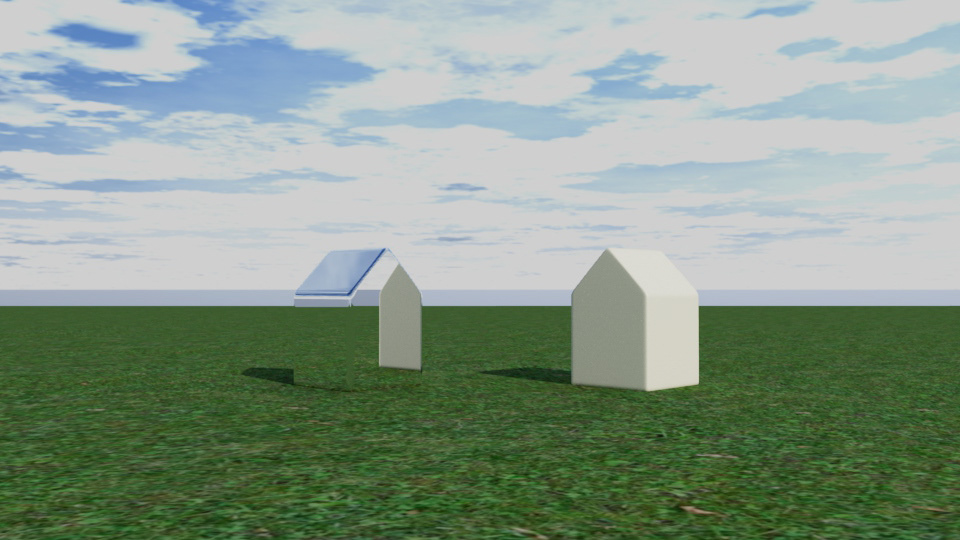
My concept centered on the idea of an in–between place: a surreal space that guides the viewer toward a doorway or portal. I focused on contrast between emptiness and structure, simplicity and intrigue. The environment uses perspective lines, reflective surfaces, and isolated forms to create a sense of anticipation, as if the viewer has arrived at the edge of another dimension.
1. Initial Blocking
I began by blocking out simple geometric forms to establish the silhouette of the environment. The early stage focused on proportion and the spatial logic of the scene.
2. Camera Planning
I tested camera angles and focal lengths to find a viewpoint that felt like a threshold — a moment of entry into a slightly unreal space.
3. Lighting Tests
Using Arnold’s Physical Sky, I experimented with directional light and shadow to create depth and atmosphere. Slight overexposure through the “glass” element helped reinforce the sense of transition.
4. Material and Shader Development
I added simple reflective and matte materials to control how light interacted with surfaces, enhancing the contrast between the grounded environment and the ethereal “looking glass” region.
5. Final Rendering
The final compositions highlight tone, depth, and the subtle shift from the physical structure to an imagined space beyond it.
Reflection
This project helped me understand how environment design can be a storytelling tool. Working with minimal geometry and strong lighting taught me to rely on mood, composition, and perspective to guide the viewer’s attention. It also reinforced the idea that even simple forms can evoke narrative when arranged with intention.